

Sustainable travel planning: Tips for an environmentally conscious start to your holiday
What it takes to go green camping
As a camper, you have already done a lot to travel in an environmentally friendly way when choosing your means of transport and accommodation. I'll show you how to plan your trip sustainably and keep your ecological footprint on the road as small as possible.
Table of contents
What is sustainable travel?
A sustainable journey is one in which present needs are met without depriving future generations of their livelihoods. So you have to try to have as little impact as possible on the environment, flora, fauna and local people while you are travelling. That sounds too complex for you? Strictly speaking, it means nothing other than taking consideration when planning the trip as well as on site.
Here we have summarised the results of the ifeu study on sustainable travel.
Packing intentionally
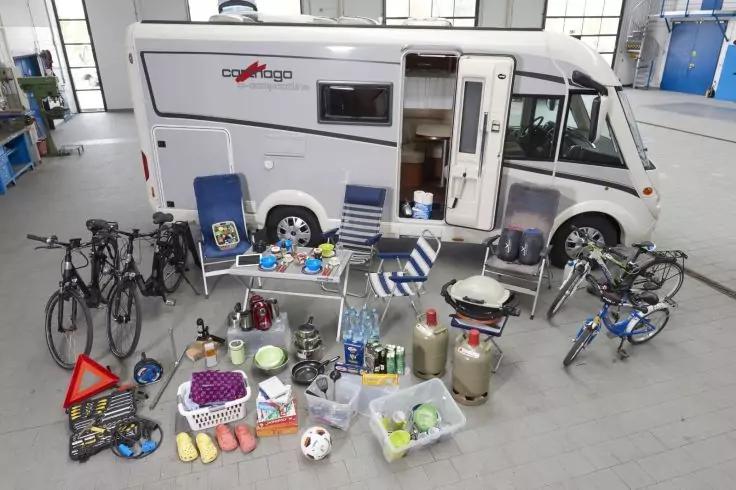
Before the trip starts, you should think about what really needs to go on holiday and what can stay at home, especially when packing. The idea is not to buy too much and thus conserve resources. You will also save a lot of fuel if you avoid unnecessary ballast.
Here you will find a checklist with everything you need for your camping holiday.
Leaving home environmentally friendly
On the day of departure, it is important to check at home that everything is prepared:
- The lights are switched off in all rooms.
- The heating is programmed so that it does not run all day.
- All windows are closed.
- Units do not run in stand-by mode, but are completely disconnected from the power supply. This also includes chargers, the radio or, for example, the coffee machine.
This way you can make sure that you do not waste electricity or heating energy unnecessarily while you are away. Now you can leave with a clear conscience.













Driving environmentally friendly
Once the suitcases are packed, we all naturally want to arrive at the holiday destination as quickly as possible. But now it is better to slow down. Because fuel-efficient driving is good for the environment and your wallet, and you also arrive much more relaxed.

- The heavier your motorhome or caravan is, the more fuel it consumes. Therefore, make sure you only pack what is really important. Also, the water tank does not have to be completely full when you set off.
- Before setting off, check the tyre pressure and adjust it if necessary. The optimum tyre pressure for your vehicle is either marked on the driver's door or sometimes on the fuel filler cap.
- On German motorways, stick to the standard speed limit of 130 km/h.
- Switch off the engine when waiting for long periods, such as at a level crossing or traffic lights.
Environmentally friendly means of transport on holiday
When travelling to and from the campsite, the following applies: The shorter the route, the better. Since we campers usually travel by motorhome or car, we have already chosen a relatively environmentally friendly means of transport – provided it is fully occupied. Generally speaking, a car occupied by four people has to travel at least 1,000 kilometres to release as much CO₂ as a flight over the same distance. This corresponds to the distance from Munich to the south of France. By travelling slowly, you can arrive relaxed, really switch off and enjoy the whole thing stress-free.
However, you should leave the vehicle on site. You can explore the surroundings by public transport, bicycle or on foot.
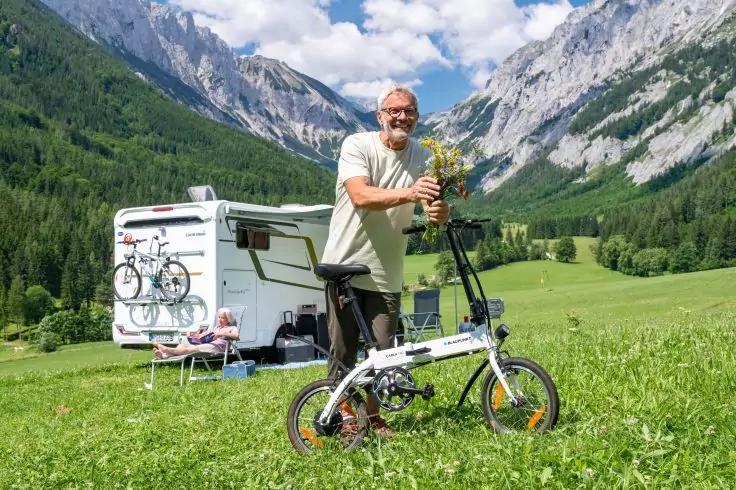
Alternatively, consider travelling short distances by train or bus. Then you can rent a motorhome or a fixed caravan on site. Many campsites have now recognised the trend and offer attractive packages for travellers who arrive without their own camping vehicle: You will be picked up from the station and provided with extensive camping equipment.
Sustainable accommodations
You can spend a particularly environmentally friendly night at a campsite of the Ecocamping network. The participating campsites undertake to use sustainably produced energy efficiently, to use water sparingly, to optimise the waste cycle or to give preference to products from the region. On average, 2.1 kilograms of CO₂ are released per person during an overnight stay at an eco-camping site, while 4.5 kilograms of CO₂ are released during an overnight stay at a „normal“ camping site.
Camping is one of the most environmentally friendly forms of holiday, because campsites are real oases of nature.
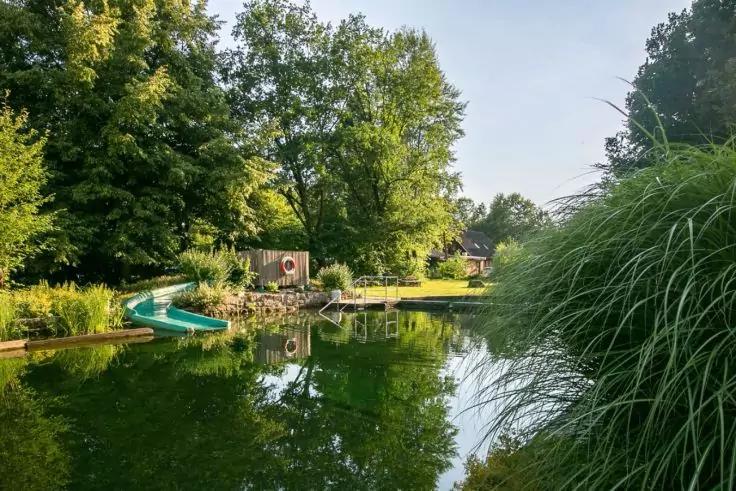
Besides the Ecocamping classification, however, there are other seals that indicate sustainability. On bookitgreen.de you can book environmentally friendly accommodation worldwide that treats rainwater, avoids waste or uses green electricity. Many organic farms also offer pitches for caravans, mobile homes or tents.
Conclusion: the way to a green camping holiday
Sustainability has also arrived in the camping sector and the environmentally conscious travel trend is constantly developing. Hopefully you can implement some of the tips on your next camping holiday and start your eco-friendly holiday relaxed. This will save you a lot of money and resources and you can keep your ecological footprint to a minimum on holiday.