
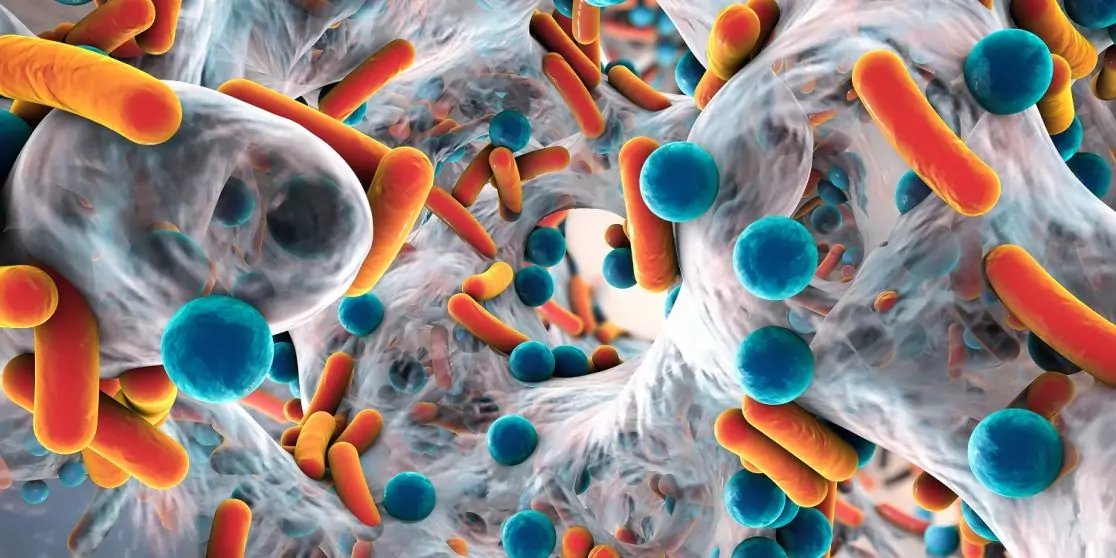



Keeping drinking water fresh and clean
Germ-free fresh water through conservation and disinfection
Clean drinking water is a precious commodity. At home, we take it for granted. But when camping, you have to take care of the water quality yourself. Here you will learn the difference between preserving and disinfecting.
Table of contents
- What is the difference between preserving and disinfecting?
- Why do I need to conserve clean water?
- Water conservation with silver
- Preserve water in bottles or canisters with tablets
- Water conservation without silver
- In which case should I disinfect the water?
- How do I apply disinfectants?
- Is chlorine always the same?
- Desinfection with UV light
- Conclusion: Decide situationally!
What is the difference between preserving and disinfecting?
An additive for preservation keeps clean water fresh longer. This is because the preservative ensures that bacteria multiply much more slowly. This only works if you fill germ-free drinking water into the fresh water tank.
Disinfection kills bacteria already present in the water. The active ingredient used, usually chlorine, transforms contaminated water into a germ-free state.
Why do I need to conserve clean water?
Drinking water from the tap is not completely free of bacteria. However, the number of bacteria is so low that they do not cause any harm in the body. The water system in the motorhome or caravan is usually not sterile either - even with regular cleaning a biofilm in the water tank cannot be completely avoided.
If water is stored in a tank for a long time, bacteria multiply exponentially through division. This means that the number of bacteria multiplies by the same factor at equal time intervals. Under ideal circumstances (temperature, nutrient content etc.) the number of bacteria doubles every 30 minutes. The following table exemplifies how a bacterium multiplies by leaps and bounds after only a few hours. In practice, however, bacteria always occur in larger numbers.
Example for the multiplication of bacteria
| Number of divisions | Number of bacteria | Time |
| 0 | 1 | 0 |
| 1 | 2 | 30 min |
| 2 | 4 | 60 min |
| 3 | 8 | 90 min |
| 4 | 16 | 120 min |
| 5 | 31 | 150 min |
| (…) | (…) | (…) |
| 15 | 32.768 | 7.5 h |
A certain amount of bacteria in drinking water is normal. However, the legislator has set limits for the maximum number of bacteria that may be contained in drinking water. The German Drinking Water Ordinance, for example, allows a maximum value of 100 CFU (colony-forming units) per 100 millilitres for legionella.
Water conservation with silver
CAUTION WITH SILVER
Silver and silver ion products have been removed from the list of permitted additives in accordance with Section 20 of the Drinking Water Ordinance. This means that as a private individual you may still use them, but you may not pass on the treated water. This also includes a glass of drinking water for visitors. The problem is that because these products continuously release silver ions into the water, their concentration in the water tank rises over a very long period of time until it can reach a level that is harmful to health.
The bacterial growth shown above can be significantly slowed down by adding silver or silver ions. Even if silver does not dissolve in water, it releases positively charged ions into the water over time. These silver ions penetrate the cell wall of bacteria, viruses and fungi, react with the cell and prevent its vital function. Numerous manufacturers estimate the effectiveness of their preservatives to be at least 6 months.
Here you can find all products for drinking water conservation in our Berger online shop.
No manual dosing is necessary with silver pads and balls
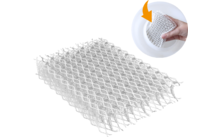
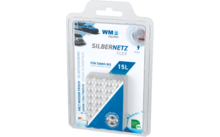
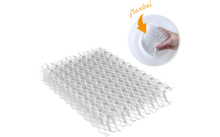
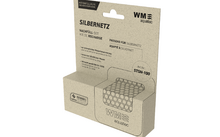
Manufacturers such as WM Aquatec and Silvertex offer silver pads, silver nets and silver balls respectively. These are simply placed in the water tank and gradually release silver ions into the water. The advantage of this method is that overdosage is impossible. This is because the water only absorbs so many silver ions until it is saturated.
Only when you take water out of the tank and refill it with fresh water does the silver additive release ions again. When buying silver pads, silver nets or silver balls, you should know the capacity of your water tank. Because these silver products are offered in different versions for different tank sizes.
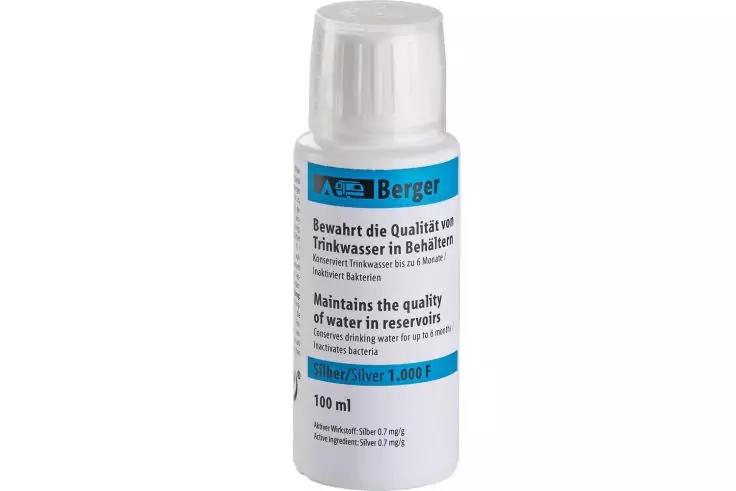
Silver preparations in liquid form are also suitable for fresh water conservation. With these products, the silver ions are already dissolved and react immediately with the drinking water when you pour them into the water tank.



Preserve water in bottles or canisters with tablets
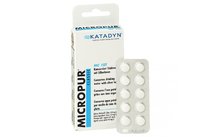

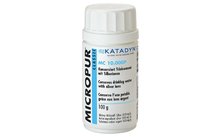
For use in small water containers, liquid preparations or powders often cannot be dosed finely enough. Therefore, Katadyn also offers the preservative Micropur Classic in tablet form.
The tablets are available in two different sizes and are particularly suitable for preserving water in canisters and bottles. This is because the dosage of the small tablet is designed for one litre of water, while the larger tablet is sufficient to preserve ten litres of water.
Water conservation without silver
Silver preparations are suspected of also having negative effects on health. So far, however, there is no evidence of health damage or even deaths caused by drinking water spiked with silver.
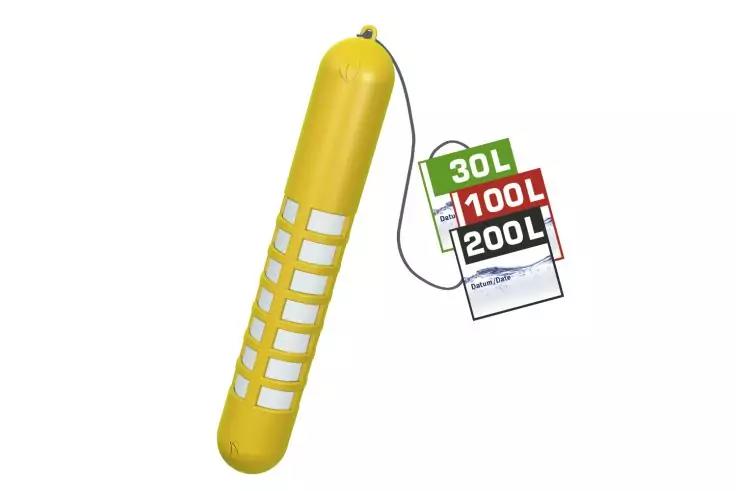
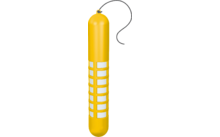
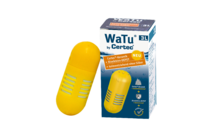
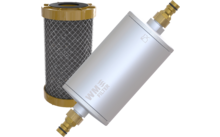
If you are still looking for a way to preserve drinking water without silver, you will find it at the Lilie company. The company, known primarily for pumps and water hoses, offers Certec3in1 a ceramic-based product. The Certec cylinder floats like a buoy in the water tank and binds slime-forming bacteria in its porous structure. In addition, a so-called bioelectro-depot releases negative ions that have an antiseptic and antibacterial effect.

In which case should I disinfect the water?
If you spend your camping holiday in Central or Northern Europe, you do not need to disinfect the fresh water. This is because strict regulations apply to the drinking water supply in these regions. When you fill the fresh water tank of your camping vehicle, drinkable water usually flows out of the tap into the tank.
Caution: Danger of confusion: Water disinfection agents are added to fresh water. Tank disinfection preparations are cleaning agents and do not belong in drinking water.
In Southern and Eastern Europe clean drinking water is not always guaranteed. Often the water comes from wells that are not regularly checked, or it is stored for a long time in elevated tanks or cisterns. In warm countries, there is also a higher risk of legionella in tap water. If you are not sure about the quality of the drinking water, you can play it safe by disinfecting it.

How do I apply disinfectants?
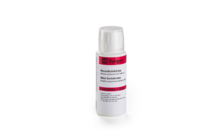
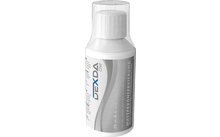
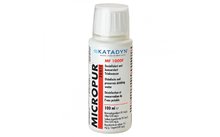
Preparations for drinking water disinfection are mostly available in liquid form. This means that they can be precisely dosed and easily added to the fresh water. You can read the required dosage on the packaging. Often, a few millilitres of disinfectant are sufficient for a water tank with a capacity of 200 litres. Measure out the correct amount with the help of a dosing cap or take up the liquid with a pipette.
As disinfectants are highly concentrated chemicals, you must not exceed the specified dosage. The "a lot helps a lot" approach is the wrong way to go in this case.
Is chlorine always the same?
Colloquially, chlorine refers to a large number of different chlorine compounds. This is because the element chlorine cannot be used in its pure form in practice. Chlorine compounds are used in swimming pools in forms other than for disinfecting relatively small amounts of drinking water.
The word chlorine often has negative connotations. Wrongly, because even common household salt is nothing more than a chlorine compound with the chemical name sodium chloride (NaCI). However, depending on their composition and dosage, chlorine-containing substances can have very different properties.
Drinking water disinfectants suitable for camping use are usually based on a solution of sodium hypochlorite. In this form, the disinfectant is less odour and taste intensive than many other chlorine compounds. In addition, liquid sodium hypochlorite is safer to transport and easier to dose than chlorine gas.
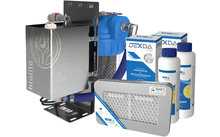
In addition to sodium hypochlorite, chlorine dioxide is also used for drinking water disinfection. This is a compound of chlorine and oxygen. Unlike other chlorine compounds, chlorine dioxide is not only effective against bacteria, but also fights viruses and protozoa. A chlorine dioxide-based preparation for drinking water disinfection is DK-Dox Aktiv Mobil. The disinfectant is filled in glass ampoules with a capacity of 30 millilitres. One ampoule is sufficient to disinfect 200 litres of fresh water.
Desinfection with UV light
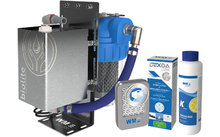
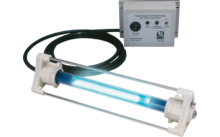
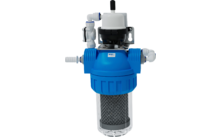
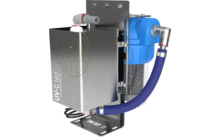
Another way to combat bacteria and viruses in drinking water is to irradiate the water with UV light. This technique is also used on a larger scale in waterworks. Modern UV devices in the camping sector work with UV-C LED technology.
They are maintenance-free, chemical-free and can be installed in the motorhome with relatively little space requirement. Thanks to their low power consumption, UV disinfection units can be operated with 12-volt battery power. However, these systems are relatively expensive.



Conclusion: Decide situationally!
You probably know the old stories of sailors who had foul water in their barrels and therefore preferred to drink alcohol. How good that today there are suitable agents for preservation and disinfection for every tank size.
However, whether you need to preserve or disinfect the water at all depends on your travel habits. If you fill up with fresh water from a clean source and use the water within a few days, you do not need to treat it at all. In all other cases, it’s better to be safe than sorry - and alcohol is really no solution.
