

Filling the water tank made easy
The best tips and helpful accessories for filling the water tank
Next to gas and electricity, drinking water is the most important resource in a camping vehicle. There are a few things to consider when filling the water tank. Here you can find out how to fill up the fresh water tank easily and conveniently and which accessories help.
Table of contents
- Water tanks for fixed installation and mobile canisters
- Filling the water tank at the pitch or campsite
- Connecting the hose: not without my adapter
- Fill with the correct amount of water
- Fill water tank at home
- Practical accessories for the hose connector
- Conclusion: an overview of the most important practical tips for filling the fresh water tank
Water tanks for fixed installation and mobile canisters
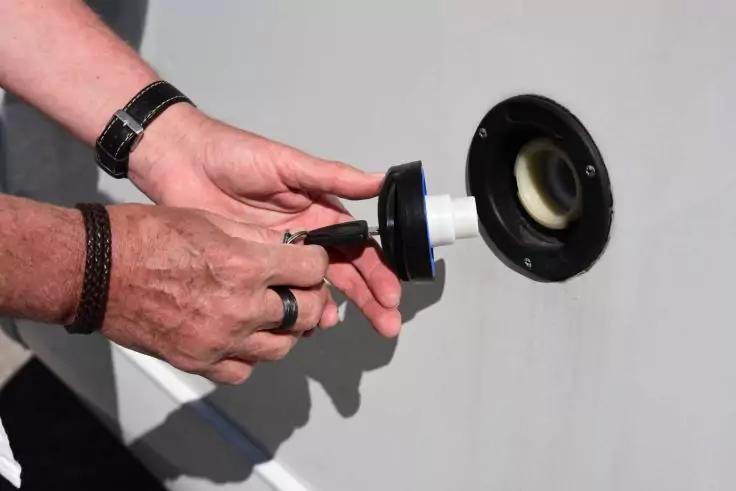
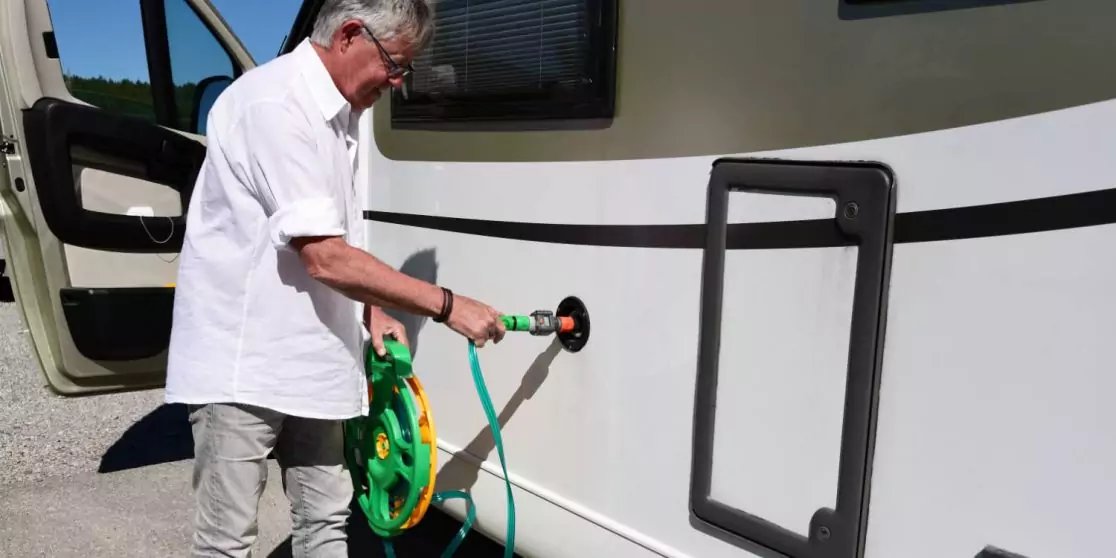
On mobile homes and caravans with a permanently installed water tank, there is a filling nozzle on the side panel. This is secured with a lockable lid so that unauthorised persons cannot contaminate the water tank.
Very old camping vehicles or even compact camping buses from more recent years sometimes have mobile water canisters. You have to remove them from the vehicle to fill them.
Filling the water tank at the pitch or campsite
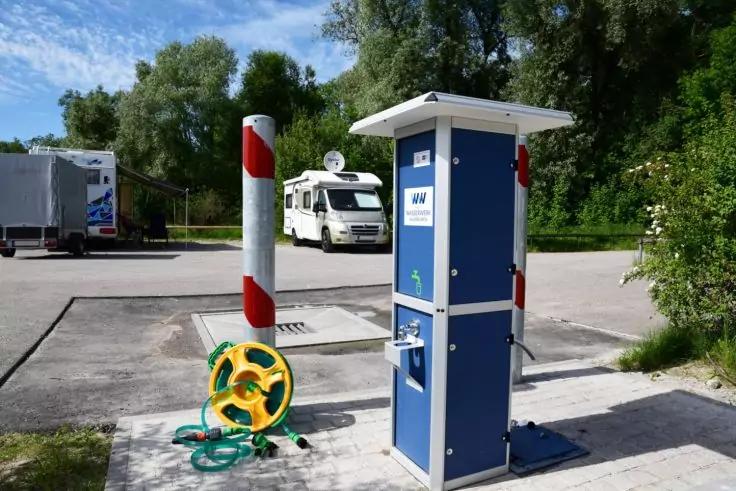
Pitches and camping sites are equipped with special supply stations (also often called "V/E" or "V/E station", abbreviated for supply and disposal). This is usually a marked or signposted area with a bottom shaft and a column-shaped water supply system.
However, the supply stations are not uniformly designed, such as a petrol pump at the filling station. Therefore, the first time you visit a pitch or campsite, you will need to get your bearings. However, for well-maintained supply stations, operating instructions are appropriate.
There are usually two water taps at the supply station. One tap, usually fitted with a short hose, is located flat above the floor in some installations, while the other tap is mounted slightly higher. Draw fresh water from the higher tap up. The other fitting is used to flush out the toilet cassette. You should not connect a fresh water hose to it.
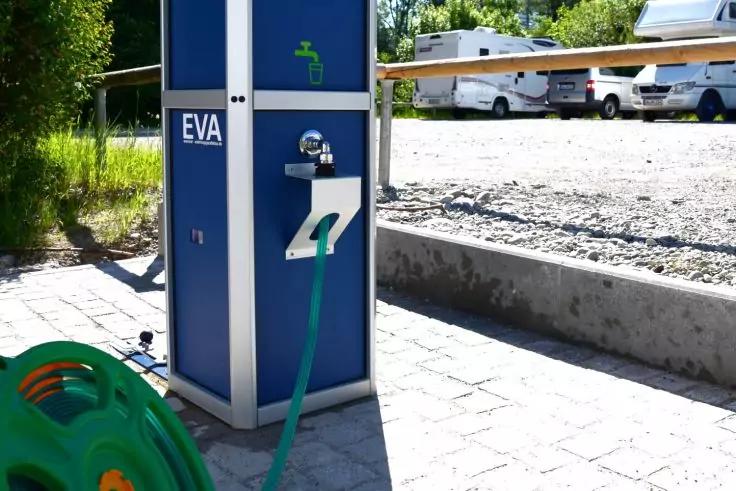
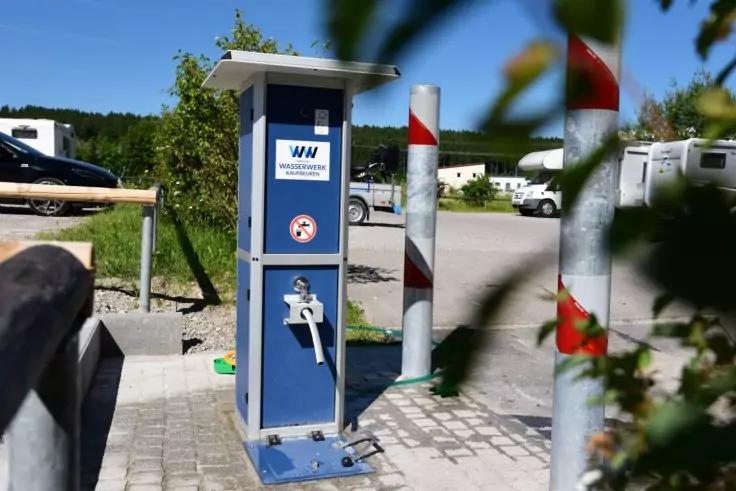
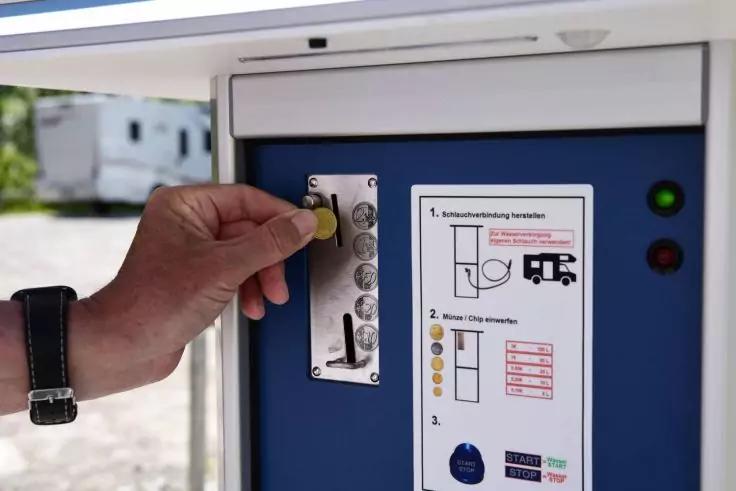
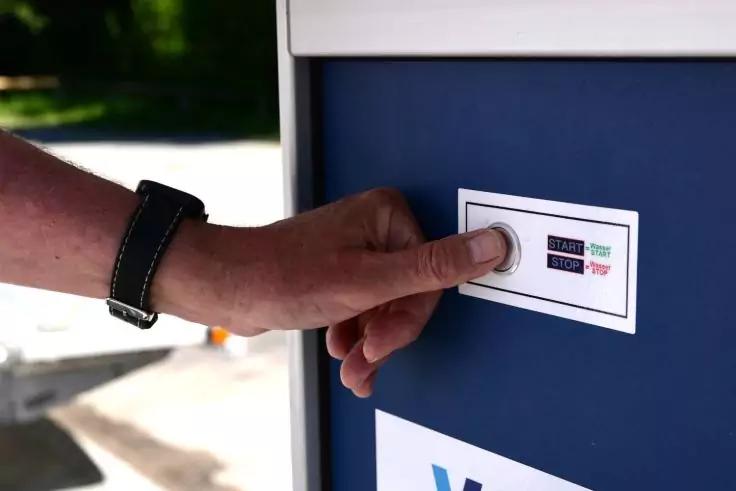
Most supply stations are equipped with a coin-operated machine. Here you can insert different coins and get, for example, 100 litres for one Euro. Common amounts for smaller amounts of water are 10, 20 and 50 cents. At some V/E stations, the water runs immediately after money is inserted. But there are also stations where you have to press a button first.
Connecting the hose: not without my adapter
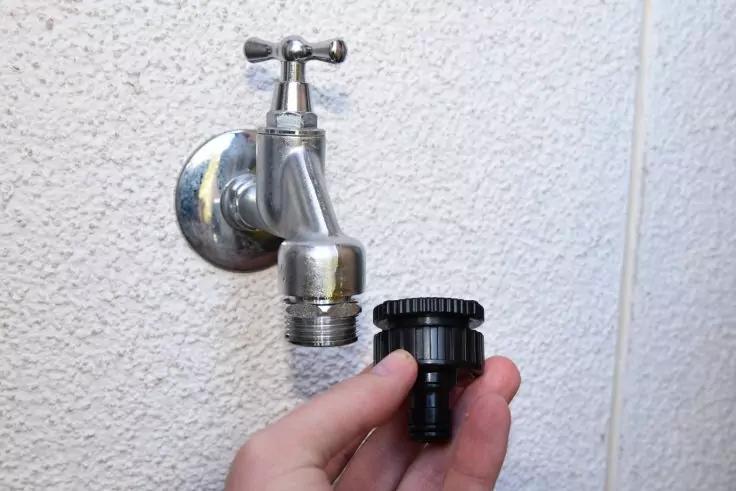
To connect the water hose to an outdoor water tap, you need a click coupling. Make sure that the hose is suitable for drinking water. With the Berger flat hose, the click coupling is already included in the scope of delivery. It is recommended to carry this adapter in two sizes in the motorhome or caravan. There are threads with ½-inch as well as ¾-inch. In the Berger online shop you will find a variety of hose reels and boxes.
Fill with the correct amount of water
"One full, please" is not always useful. It is not uncommon for a water tank in larger mobile homes to hold up to 150 litres. This is mass that has to be moved during the journey. The consequences are increased fuel consumption and reduced load reserve. It is therefore better to fill up only a few litres as an emergency supply for the journey to the holiday destination and to only fill the water tank completely at the destination.
In this case, the so-called driving position can be activated on modern water tanks. The fill level can be reduced to a maximum of 20 litres by means of a small rotary wheel attached directly to the tank. If more water gets into the tank, it runs straight out again.
Never go on holiday with a full water tank. Only fill a few litres as an emergency reserve, this saves weight and allows for more reserves in the payload.
You can also control how much water you put in the tank in another way:
- At many V/E stations, you determine the amount of water by the amount of money you put in. If you only need 50 litres, you throw in the corresponding amount.
- You can read the fill level via the display panel in the interior. During filling, however, the display is not very helpful because you cannot see it from the outside.
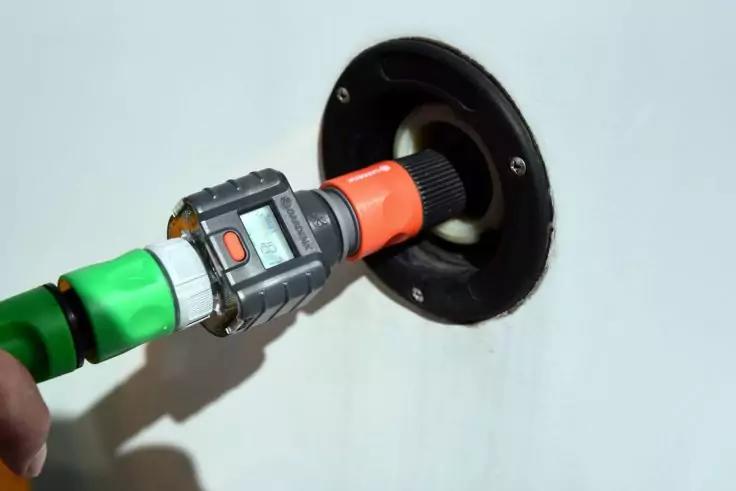
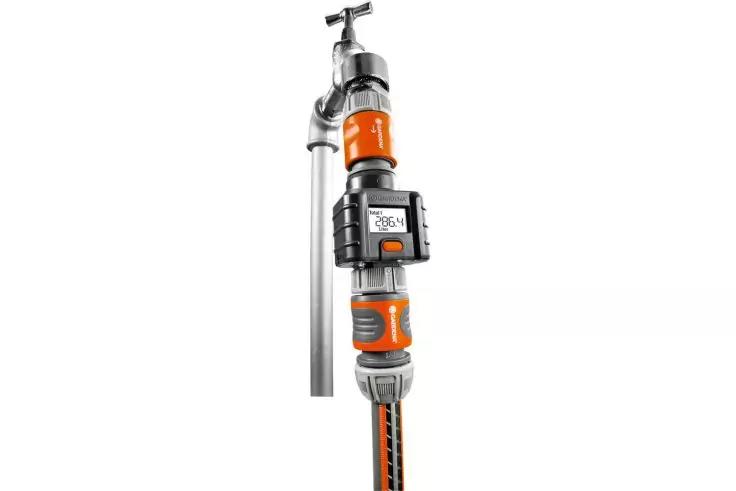
- The fill level of the water tank can be monitored particularly conveniently during filling with the Gardena Water Quantity Meter. The small battery-operated device is connected to the hose via a quick coupling and measures the amount of water flowing through. If you fill an empty water tank, you only have to read on the water meter how much water has already flowed through. Then you can simply stop at the required amount. Here you can find the Gardena water meter in our Berger online shop.
Fill water tank at home
If local conditions allow, you can fill the water tank at home before departure. Park your motorhome or caravan next to the house and put a water hose out over the window. It is especially practical if you have an outdoor tap.
To connect the hose to a standard indoor tap, you need an adapter. This is because many household taps usually have an internal thread in which the aerator is screwed in. Fittings for outdoor use, on the other hand, usually have an external thread.
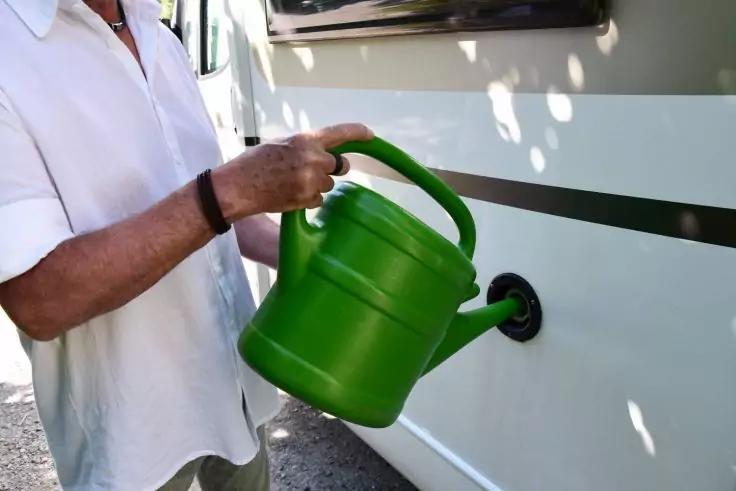
If there is no parking space for your camper next to your house or flat, you can also use a watering can to fill it with at least a few litres. The filling nozzle on the outside wall of the vehicle is large enough to push the spout of the watering can in a little way.
Tip: Pour the water slowly, otherwise some of it will spill out of the filling nozzle again.
Practical accessories for the hose connector
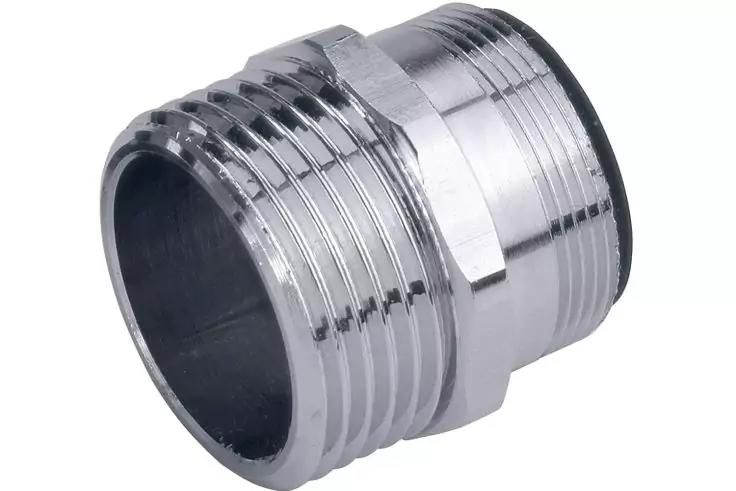
Bead jet thread adapter
With this adapter you can connect a hose to household taps with internal thread. For installation, you must first unscrew the aerator from the tap. It is best to hold a hand under the tap, because a sealing ring that is loose on the aerator usually falls out. Instead of the aerator, screw the thread adapter into the tap. Now the tap has an external thread.
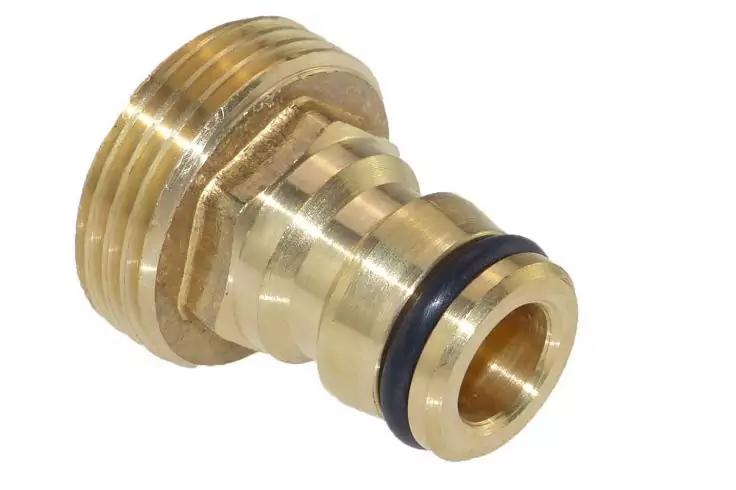
Click adapter
You can connect the water hose to a click adapter with the help of a quick coupling. You need this adapter for both indoor and outdoor taps.
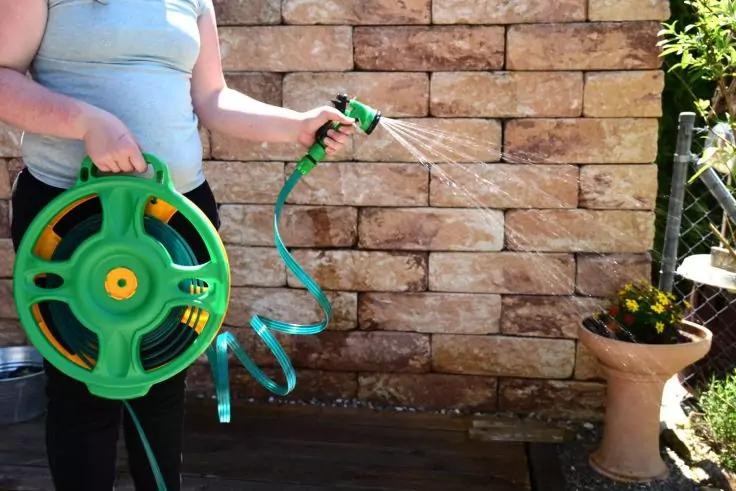
Berger Special Hose Reel
The Berger Special Hose Reel can also be used in the home garden. The included spray attachment is ideal for watering flowers. Particularly practical: the flat hose does not have to be completely unrolled during watering. Here you can find special hose reels in our Berger online shop.
Conclusion: an overview of the most important practical tips for filling the fresh water tank
- You attach the hose with a click coupling (screwed onto the tap) and a quick coupling (attached to the hose).
- Always take two click couplings, one in ½ and one in ¾-inch, with you on your journey.
- Always keep a supply of coins in the camper van or caravan. Because for many V/E stations you need small change.
- Keep the hose and adapter clean. Make sure that the end of the hose does not fall on the floor. This is because there can be residues from emptying the toilet or from grey water that contaminate the hose with bacteria.
- A watering can is bulky but can be useful if filling with a hose is not possible.
